Why the Tiny Hole in a Safety Pin Is More Useful Than You Think!
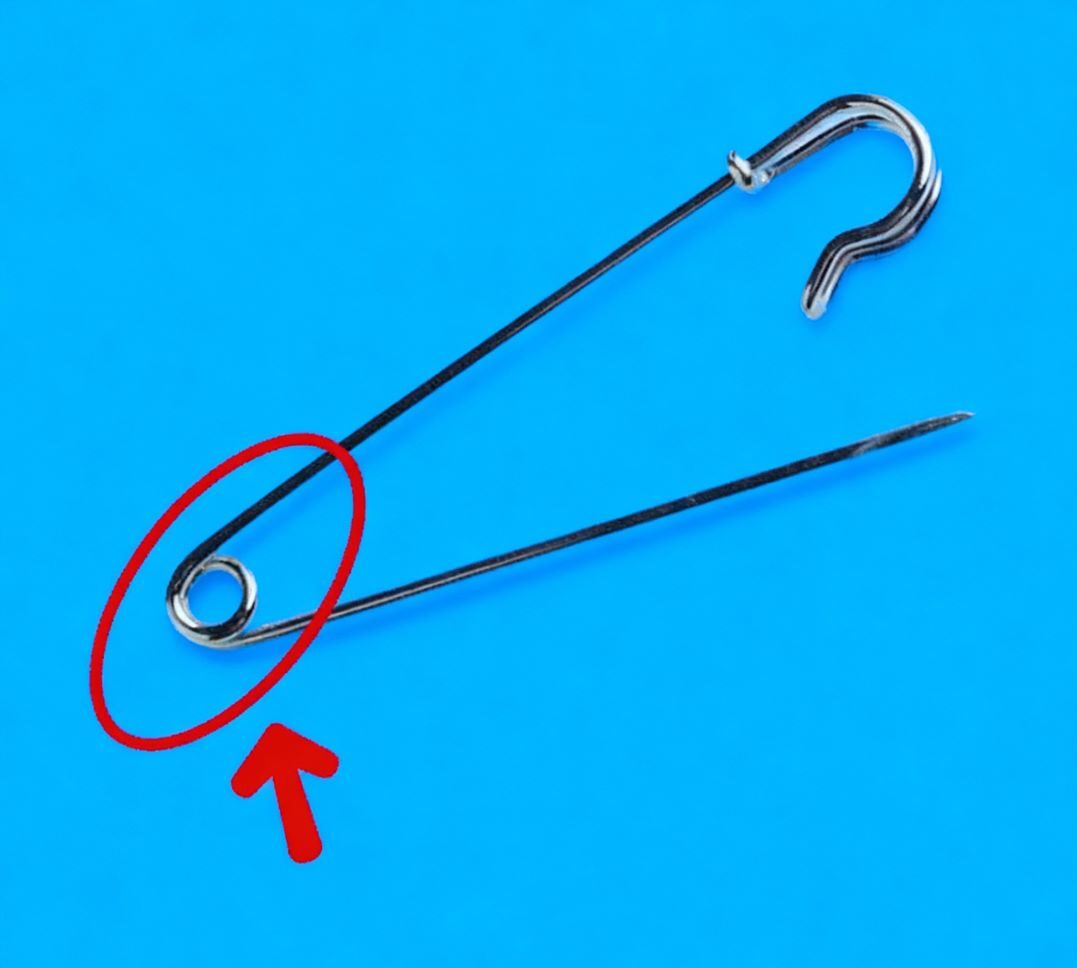
The safety pin is one of those everyday objects so familiar that most people never stop to question its design. It appears simple at first glance: a small piece of metal wire shaped to fasten fabric securely without causing harm. It shows up in sewing kits, first-aid boxes, gym bags, and desk drawers, quietly solving problems without asking for attention. Yet hidden within this modest tool is a thoughtful design detail that reveals how much care went into its creation.
If you look closely at a standard safety pin, you’ll notice a small circular hole near the coiled end where the wire bends back on itself. Many assume this opening is decorative or a leftover detail from manufacturing. In reality, it serves a very specific and practical purpose that dates back to traditional sewing techniques. That tiny hole is intentional, and once its use is understood, it can save a surprising amount of time and frustration.
One of the most common challenges in sewing and clothing repair is feeding elastic, ribbon, or a drawstring through a fabric casing. These casings are narrow tunnels sewn into waistbands, cuffs, and hoods, designed to hold flexible materials. The usual method involves attaching a safety pin to one end of the elastic and slowly pushing it through the casing. While effective, this approach often leads to twisting, snagging, or losing the pin inside the fabric, turning a simple task into an annoying ordeal.
The small hole on the safety pin offers a clever solution. By threading a piece of yarn, strong thread, or thin cord through that opening and leaving it trailing outside the casing, the user gains much greater control. The pin is still fastened normally to the elastic, but the added thread acts as a guide and safeguard throughout the process.
This extra connection helps keep the pin properly aligned as it moves through the fabric, reducing the chance of it flipping sideways or getting caught. If the pin slips or disappears inside the casing, the thread allows it to be gently pulled back without tearing seams or starting over. The motion becomes smoother and more continuous, making the task quicker and far less irritating.
This thoughtful detail reflects a design philosophy rooted in practicality. Rather than adding complexity, the tool itself quietly provides multiple functions through a single, simple feature. For generations, people who sewed regularly understood this trick as common knowledge, passed along through experience rather than instruction manuals.
Beyond its immediate use, the safety pin’s design highlights a broader lesson about everyday tools. Many traditional objects were created with versatility in mind, long before specialized gadgets became common. Each part was shaped to serve a purpose, often more than one, without drawing attention to itself. The safety pin’s enduring form is proof that good design doesn’t need to change when it already works exceptionally well.
Using this small feature today doesn’t require abandoning modern conveniences. It simply means recognizing the value built into objects we already own. With a bit of awareness, the same safety pin that has existed for over a century can still offer smarter, more efficient solutions to everyday problems.
The safety pin has remained largely unchanged since its invention in the mid-19th century because its balance of simplicity and function was achieved early on. That tiny hole, easily overlooked, represents the quiet brilliance of thoughtful design. It serves as a reminder that innovation doesn’t always arrive in bold new forms. Sometimes, it’s been in our hands all along, waiting to be noticed.