I Found a Newborn Abandoned 18 Years Ago—The Reunion on Stage Left Me Speechless
For over forty years, I moved through life like a ghost. My name is Martha, and I was a janitor—the invisible hands that scrubbed floors, wiped counters, and erased traces of thousands of strangers, all while the world passed me by. Most people see night shifts as lonely or sad. I never did. My work was honest, and it built a foundation for my three children—Diana, Carly, and Ben—to climb into lives far grander than mine.
They grew up, moved out, and, over time, they grew away. The holidays became perfunctory, scripted affairs. Flight schedules, recitals, in-laws—they all left no room for a mother who smelled of floor wax. I had become a relic of the past, a shadow my children preferred to ignore.
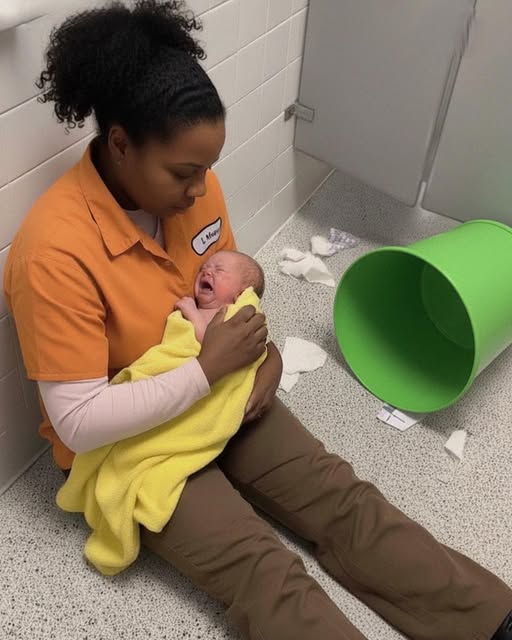
Then, one Tuesday morning, life changed in an instant. At a rest stop along I-87, I was mopping near the sinks when I heard a thin, desperate cry. Behind a trash bin, I found a newborn baby boy, wrapped in a stained blanket, with a frantic note: “I couldn’t do it. Please keep him safe.”
In that moment, the sterile bathroom became a sanctuary. I held him close, my uniform rough against his fragile body. A trucker named Tim helped me keep him warm while dialing 911. I whispered promises into his tiny ears: you are safe now.
I couldn’t let go. I followed him through the hospital, through the foster system. Agencies doubted me—a sixty-three-year-old woman working two night jobs was not their idea of a parent. But I didn’t care. I gave up my contracts, sold my coin collection, and dipped into savings. Six months later, John was legally mine.
My biological children barely reacted. Diana sent a thumbs-up emoji. Carly ignored me. Ben’s text was cold. But John… John saw me as his world. He grew into a brilliant, inquisitive young man, obsessed with science, full of wonder. I was the one who cheered the loudest at science fairs, helped carry projects, and watched him conquer every challenge.
At eighteen, John presented at a national science conference. In a room full of polished, affluent strangers, he scanned the audience until his eyes found mine. “My mother is the reason I am here,” he said into the microphone, his voice steady. “She found me when I was alone and never let me forget that I mattered.” The applause that followed wasn’t for his science—it was for the love that had fueled it.
A year later, I fell and shattered my hip. My biological children were silent. John dropped everything. He became my hands and feet, cooking, cleaning, reading aloud, holding my hand through the long nights. That night, I updated my will. Every cent, every memory, every home I owned went to John. My other children received small, symbolic tokens—reminders of what they had chosen to leave behind.
The backlash was fierce. Threats, vitriol, legal letters—but I held John’s hand and reminded him: they had abandoned me. John never asked for money or possessions; he only asked for love. And he gave it freely, in ways my biological children never had.
Now, I am older. My body is tired, but my heart is full. John gave me purpose, a home, and the greatest gift a mother can receive: the knowledge that I am truly, deeply loved. I am no longer a ghost. I am seen, cherished, and finally, at home.
Sometimes, family isn’t the people you’re born to—it’s the ones who choose to love you unconditionally. Find those people, and never let them go.