SOTD – Rob Reiner did not hold back, Read his words on Trump!
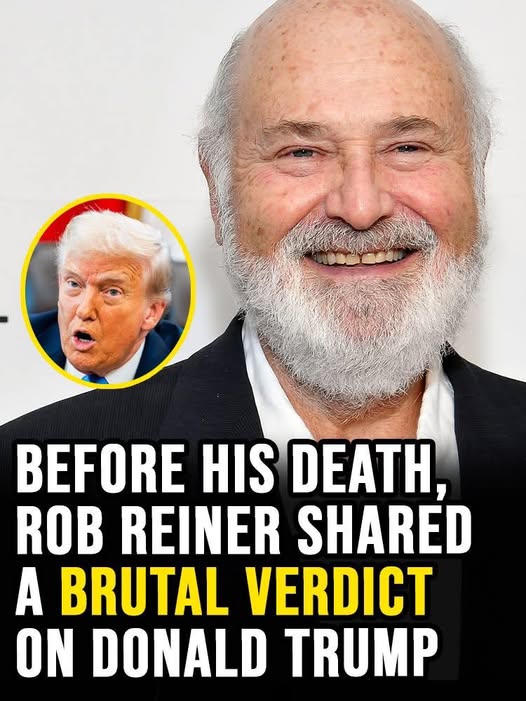
Reports claiming the deaths of Rob Reiner and his wife circulated rapidly online, wrapped in sensational headlines and breathless urgency. They were wrong. The filmmaker and actor—very much alive—became the latest target of a familiar digital phenomenon: a viral misinformation cycle that weaponizes shock to harvest attention. What made the episode spread so quickly was not evidence, but timing—arriving amid heightened political polarization and Reiner’s long-standing, outspoken criticism of former President Donald Trump. In today’s algorithm-driven media ecosystem, controversy travels faster than verification, and public figures who speak plainly often become lightning rods for falsehoods.
Reiner’s name carries decades of cultural weight. From his work behind the camera to his advocacy off it, he has never been content to stay neutral when democratic norms, civic responsibility, or constitutional values are at stake. That candor has earned him admiration and backlash in equal measure. It has also made him a frequent subject of misleading headlines that blur the line between opinion and fact, critique and character assassination. The recent claims—asserting that he and his wife were found deceased and that law enforcement was treating the matter as a homicide—had no basis in reality. No police confirmations. No official statements. No credible reporting. Just a viral claim repeating itself across low-quality aggregators.
The anatomy of the rumor was telling. It fused two attention magnets: celebrity tragedy and political outrage. The headline implied finality and urgency, while the body offered no verifiable details, leaning instead on the vague authority of unnamed sources. This is a classic misinformation pattern. By the time readers pause to ask whether a reputable outlet has confirmed the story, the post has already done its work—generating clicks, comments, and shares.
The confusion was amplified by Reiner’s visible presence in political discourse. For years, he has used social platforms to argue forcefully against what he sees as threats to democratic institutions, the rule of law, and civic truth. He does not hedge. He does not soften language for comfort. That refusal to equivocate makes his words travel—and makes him a target for distortion. When a false report frames a critic as a tragic figure, it attempts to silence by spectacle rather than argument.
Responsible journalism requires a higher bar. When genuine tragedies occur, they are accompanied by on-the-record confirmations, official releases, and corroboration across multiple independent outlets. None of that existed here. The Los Angeles Police Department issued no such statements. No court filings appeared. No family representatives confirmed anything. The absence of verification was not a delay; it was decisive evidence that the claim was fabricated.
What remained real—what continues to be real—is Reiner’s voice in public life. He has been explicit about his views, grounding them in history, constitutional law, and a belief that democratic systems erode when lies are normalized. Agree or disagree, his positions are stated openly and argued on the merits. They are not whispers or innuendo. They do not rely on anonymous sourcing. That transparency is precisely what misinformation campaigns seek to undermine by replacing debate with distraction.
The episode also highlights a broader risk in the attention economy: repetition creates plausibility. When the same false claim appears across multiple sites, readers may mistake ubiquity for accuracy. This is why media literacy matters. Before accepting extraordinary claims, readers should look for primary sources, named officials, timestamps, and confirmation from established news organizations with accountability standards. If a story depends on shock and secrecy, skepticism is warranted.
There is another cost to rumors like this—one that extends beyond the individual targeted. Each viral falsehood chips away at trust in institutions and reporting. It teaches audiences to expect catastrophe without proof and to consume politics as spectacle rather than substance. Over time, that erosion makes it harder for verified information to break through when it truly matters.
Reiner’s actual public engagement during this period underscores the contrast. He continues to advocate, write, and speak, emphasizing the importance of civic participation and the dangers of disinformation. His critics challenge his arguments; his supporters amplify them. That is the proper arena for disagreement. Invented tragedies are not commentary—they are manipulation.
The takeaway is straightforward: accuracy is not optional. In a media landscape crowded with noise, truth requires discipline from publishers and discernment from readers. Public figures should be evaluated by their words and actions, not by fabricated narratives designed to provoke emotion without accountability.
As the false reports fade, what remains is a reminder of the stakes. Democracy depends on shared facts. Journalism depends on verification. And public debate depends on the willingness to confront ideas directly rather than bury them under sensational lies. Rob Reiner did not vanish into a tragic headline. He remains present, vocal, and exactly where he has always been—arguing his case in the open, where facts still matter.