A Holiday Lesson in Family, Respect, and the Impact of Our Actions
The sound of my children laughing used to ground me. Last Christmas Eve, it cut straight through me.
I was alone in my Seattle kitchen, phone in hand, staring at a message they never meant for me to see.
“He’s unbearable. No one wants to spend Christmas with him. Let him eat alone.”
They thought I was a harmless, fading retiree who would quietly swallow the insult. What they didn’t know was that at fifty-nine, I had finally stopped shrinking.
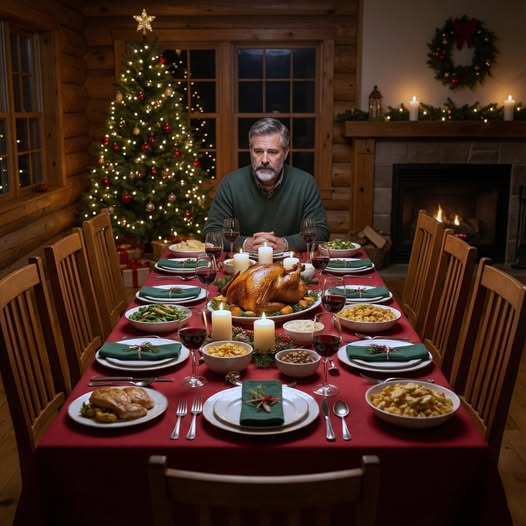
By early evening, my house smelled like devotion. The turkey had been brined for days. The cranberry sauce simmered with orange peel and a splash of bourbon. The table was set for nine—three grown children, their partners, and two small chairs waiting for my grandchildren, Parker and Ella. I wasn’t desperate or lonely by default. I was a chef, a teacher, a man with a full life. But this night mattered. This night was supposed to be family.
Weeks earlier, I’d sent the invitations. The replies were half-hearted at best: a “maybe,” a thumbs-up, long stretches of silence. Still, I held onto hope. Until the messages arrived.
“Do we really have to go?”
“I already told my wife we’d be somewhere else.”
“He’ll guilt us anyway.”
Then the laughing emoji.
The pain didn’t explode. It sharpened. I looked at the untouched plates and felt something settle instead of break. Years of quiet enabling suddenly made sense. Loans I never got back. Savings lost to their “ideas.” Being edited out of photos because I didn’t fit their image.
I picked up the phone and called Jordan, the son of a friend. “I need a camera,” I said. “And I need to go live.”
Twenty minutes later, the stream began: Eating Christmas Dinner Alone: A Father’s Story.
I didn’t rant. I didn’t beg. I carved the turkey, served myself, and told the truth. About the money. About the distance. About the text messages. The red “LIVE” icon blinked while the world watched.
By midnight, millions had tuned in.
The internet did what it does. By morning, the messages my kids had sent were everywhere. Their professional lives unraveled fast. And suddenly, my phone wouldn’t stop ringing.
“Take it down,” my oldest demanded.
“Did I lie,” I asked calmly, “or did you?”
Another blamed me for ruining his business.
“I’m done covering for you,” I said.
My daughter tried charm, then panic.
“I’m not invisible anymore,” was all I replied.
Two days later, I sat with an estate attorney. I rewrote everything. My grandchildren were protected. My children received only what the law required. The rest went to a foundation supporting abandoned parents. I put the house up for sale. It carried too many echoes.
Then came the unexpected call. A producer had seen the video. What began as a lonely dinner had become a conversation about dignity, boundaries, and self-worth. A new chapter opened.
The consequences for my children were harsh but honest. Jobs lost. Illusions shattered. I didn’t celebrate their fall—but I didn’t stop it either.
Months later, handwritten letters arrived. No excuses. No requests. Just accountability. They were working real jobs. Parenting differently. Learning humility the hard way.
I took my time. Healing doesn’t rush.
In early summer, I met my grandchildren by the lake. They ran to me without hesitation.
“Dad makes pancakes now,” Parker said proudly.
I watched them laugh and realized something important: family isn’t guaranteed by blood. It’s built through respect, presence, and truth—shared slowly, one honest meal at a time.
If this story resonated with you, share it with someone who needs a reminder: it’s never too late to choose yourself, and boundaries can be the beginning—not the end—of real connection.