Donald Trump uses shock slur in late-night Thanksgiving message
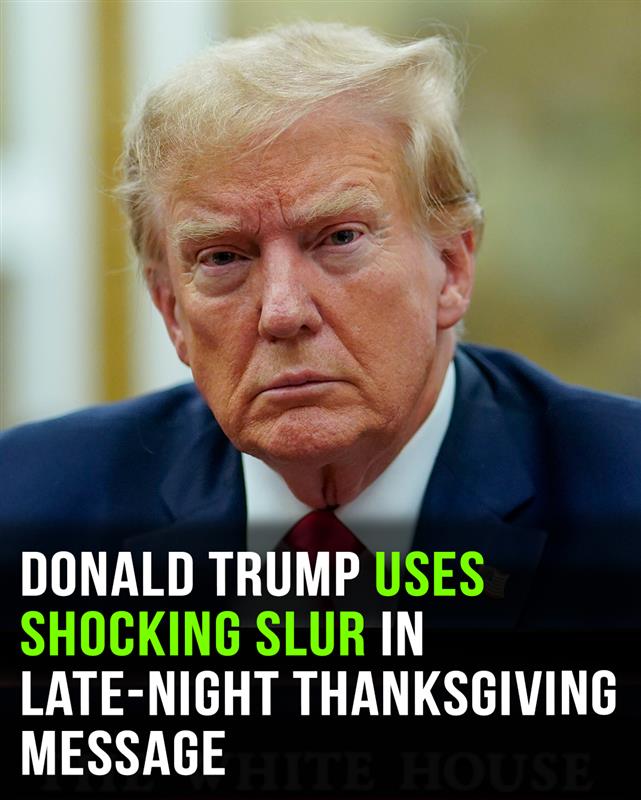
Donald Trump has never been a quiet figure in American politics, but this year’s late-night Thanksgiving message created a wave of discussion far larger than anyone expected. What is normally a moment of national calm instead became a point of intense debate, surprising not only his critics but also many people who usually support him.
The atmosphere was already tense earlier that day. Two National Guard members had been injured in a shooting near the White House, raising concerns about security and immigration policy. Authorities identified the suspect as 29-year-old Rahmanullah Lakanwal, an Afghan national who arrived in the United States in 2021 and was later hospitalized after being confronted by law enforcement. The incident quickly reignited political disagreements nationwide.
Late that evening, Trump posted a Thanksgiving message on Truth Social. It began with the familiar tone of a holiday greeting but quickly shifted toward broader political commentary. He called for stronger immigration restrictions and used the D.C. shooting as part of his argument. From there, his message expanded into sharp criticism of several Democratic leaders, which immediately drew national attention.
One portion of the post spread widely across social media within minutes. In it, Trump referred to Minnesota Governor Tim Walz in a dismissive way and made pointed remarks about Representative Ilhan Omar, referencing her background and political positions. Screenshots circulated rapidly, creating a wave of online reactions.
Walz responded shortly after with a brief but notable statement on X, adding even more fuel to the conversation.
A later CNN report added another twist. While Trump suggested the current administration was responsible for allowing the suspect into the country, records indicated that Lakanwal applied for asylum in 2024 and that the approval occurred in April 2025 — during Trump’s own term. When asked about the discrepancy, Trump declined to engage directly and criticized the reporter who raised the question.
The message continued for several paragraphs, focusing on immigration, national security, and the future of U.S. policy. Because it was delivered on a day usually associated with calm, family, and reflection, the tone stood out immediately. Social media quickly erupted with reactions from across the political spectrum.
Supporters praised Trump’s directness, saying he addressed issues they feel deserve urgent attention. Others — including some conservatives — felt the message was unusually confrontational for a holiday. Advocacy groups and community leaders also voiced concern about the language used and the potential impact on immigrant communities.
Analysts noted that Trump’s call for a sweeping pause on immigration raises legal and logistical questions that would likely face challenges if pursued. Still, none of this slowed the growing online debate. By the following morning, the message had become one of the most discussed political posts of the entire Thanksgiving weekend.
The D.C. shooting added a serious and emotional backdrop to the conversation. As the investigation continues, the details surrounding the suspect’s asylum approval have complicated the political narrative surrounding the incident.
What made Trump’s message especially striking was the contrast between public expectations — a simple holiday greeting — and the forceful political arguments he delivered instead. It highlighted once again that Trump rarely adjusts his tone for holidays or national moments, and that he remains fully committed to shaping public dialogue in ways that capture widespread attention.
With ongoing investigations, continued fact-checking, and political tensions running high, the impact of Trump’s Thanksgiving message is likely to extend well beyond the holiday weekend. It has already become a key point of discussion in homes, newsrooms, and online spaces across the country.
Whether seen as candid commentary or unnecessary escalation, one thing is clear: Trump ensured that Thanksgiving ended with a national conversation centered squarely on his words — and the debate is still far from settled.