Mystery Man Who Donated $130 Million to Pay US Troops ID-ed! You Wont Believe Who It Is
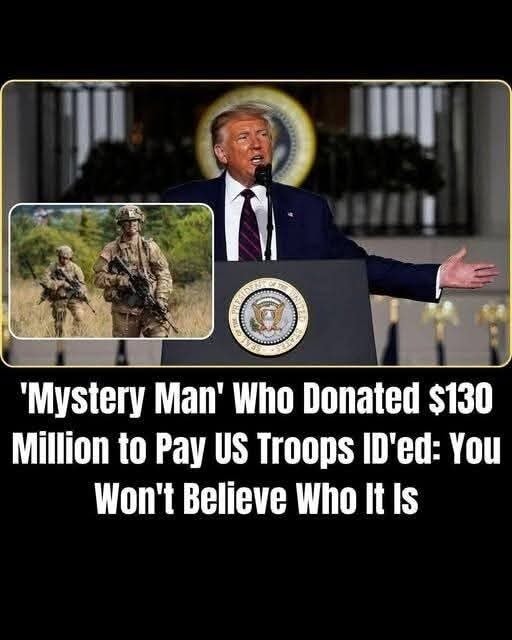
Washington D.C. is no stranger to gridlock, but the current government shutdown has taken dysfunction to new heights. Now, a surprising twist has shaken the capital: an anonymous billionaire offered $130 million to cover the paychecks of U.S. service members working without pay—and the mystery benefactor has been revealed as Timothy Mellon, heir to a historic banking fortune.
The drama unfolded on a tense Friday as President Trump announced that an unnamed donor had stepped forward with the staggering offer. Speculation ran wild, with guesses ranging from tech moguls to hedge fund titans. By Saturday, major news outlets identified the donor: Timothy Mellon, a reclusive billionaire with a $14.1 billion fortune and a long history of quietly shaping America from behind the scenes.
Mellon is no typical public figure. Grandson of Andrew Mellon, the legendary Treasury Secretary, he has avoided the spotlight, preferring a life of eclectic ventures—aviation projects, railroad investments, and even funding Amelia Earhart expeditions. Politically, he has emerged as a unique force: a top Republican donor, yet also a major supporter of independent campaigns, signaling a focus on disruption rather than party loyalty. His offer to fund military salaries fits that pattern: bold, unconventional, and attention-grabbing.
The stakes are real. For twenty-five days, the federal government has been shut down, leaving military families in financial limbo. Unlike civilian employees who can be furloughed, active-duty service members must report for duty—train, deploy, and risk their lives—without pay. Failed legislative attempts have left many struggling to pay bills, buy groceries, or keep up with daily expenses.
Mellon’s $130 million donation could be transformative—but the Antideficiency Act stands in the way. This federal law prohibits agencies from spending funds that haven’t been formally appropriated by Congress, ensuring that the power of the purse remains with the legislature. Even if Mellon’s money were available tomorrow, the Department of Defense would likely be legally barred from distributing it to troops without Congressional approval. Lawyers and legal experts are now exploring potential workarounds, but the path is complicated, and ethical questions about private funding of public duties loom large.
Regardless of the outcome, Mellon’s move has shifted the conversation. It’s no longer an abstract debate over politics or budget lines—it’s about real people struggling to survive while serving their country. For many, the billionaire’s offer highlights both the urgency of the crisis and the frustration of a system that leaves soldiers financially vulnerable while lawmakers debate in marble halls.
As the shutdown drags on, the fate of Mellon’s offer—and the well-being of countless military families—remains uncertain. His action, whether ultimately realized or blocked by law, is a stark reminder of the gaps in governance and the unexpected ways private citizens can step into the void.
For now, all eyes are on Congress, the Pentagon, and the legal questions surrounding this historic donation. And Timothy Mellon, as elusive as ever, remains at the center of a national story that combines patriotism, wealth, and the limits of governmental authority.
What do you think?
Could private solutions ever work in public crises, or should government always hold sole responsibility? Share your thoughts below!